What’s all this about STEAM?

#Pure tech
03.01.2023
Juan de la Herrán y Crespo
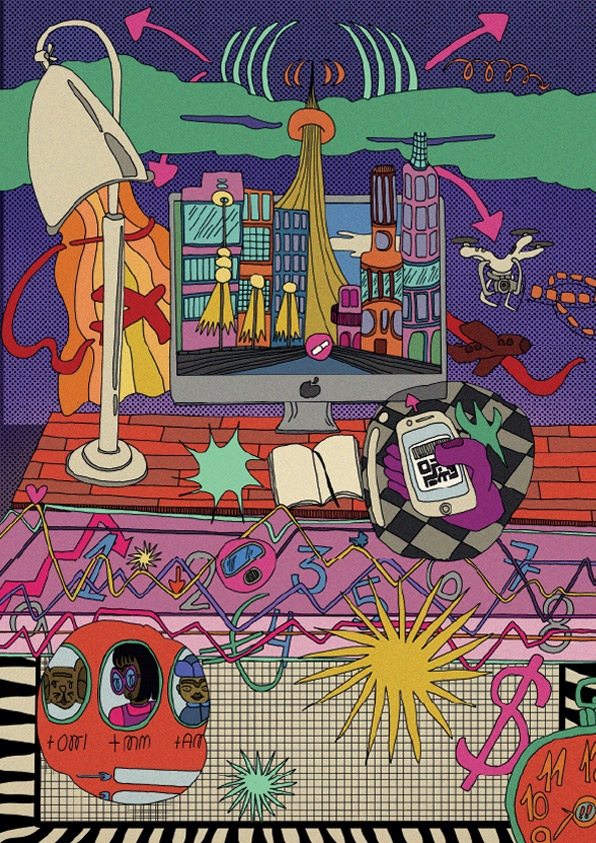
Ilustration: Raisa Alava
If this is the first time you’ve heard this acronym, or you think we’re talking about Valve Corporation’s digital video game distribution platform, you’re going to discover a term that’s fundamental to understanding what technology is.

NEITHER SCIENCE NOR LETTERS… BOTH
People began to talk about STEM (Science, Technology, Engineering, and Mathematics) years ago to unify said academic disciplines, applying the concept to topics related to science, education, the workforce, national security, and immigration. While learning scientific/technological disciplines is indeed important to be a competitive professional, it’s useless if it’s not combined with disciplines that encourage problem-solving, imagination, and curiosity. This is why we currently talk about STEAM, incorporating the letter ‘A’ for “Arts”. We’re not talking about specific degree programmes or studies, as this term is not only linked to universities. In fact, we can talk about STEAM in vocational training, in early childhood education, and in courses of all kinds, and in any format (face-to-face, online, or a mixture of all of them). The important thing is to know that these types of studies draw fewer students every day, despite the fact that reason dictates that they should be the most sought-after and in-demand.

Fewer and fewer young people are opting for STEAM studies. So, we have to know how to stimulate scientific and creative thinking, or we may be looking at a talent gap in a few years.
THE DIY-TECHNOLOGY GENERATION
Right now, Europe needs one million professionals in this area – positions that haven’t been filled. At the same time that we’re talking about a scourge of unemployment in the USA, forecasts call for 1.2 million jobs in Science and Technology. The strange thing is that there is increasing interest on the part of young people in these sectors, but from a point of view departing from traditional education: “non-formal education” or the “maker culture” is based on the ideas of doing it yourself, sharing it, and innovating. An example of all this lies in 3D printers, the use of Raspberry Pi and Arduino boards to allow us to undertake practically any technological project that we can think of right from home (DIY-technology).
Young people have always looked to what’s “trending”. I don’t know to what extent this is true today, but it’s always been said that if a TV series about lawyers becomes popular among young people, after a few years we’ll have long queues at law schools to sign up to study at them. Looking at TV and the channels that students currently use – especially social media, YouTube, and Twitch – it would seem that we are going to fine queues in a few years to participate in talent shows, reality programmes, and to emulate YouTubers, but not at engineering or biotechnology schools.
DIGITAL CONSUMERS WITHOUT A VOCATION FOR TECHNOLOGY
A term I never use is the term “digital native”. We see how young people create a YouTube channel and upload video game snippets, and this makes us think that we have a computer expert at home. But that’s not the case. What we have is a digital consumer who knows how to use some tools, but doesn’t know how they work, how to get the most out of them, or how to overcome the challenges of the future. Their only interest is in continuing to increase the number of followers they have and, surely, the money they can make off them.
Another problem with this lack of vocation is that there aren’t many women who opt for these types of studies. The problem goes back to very young ages, not just when teenagers decide what to study after finishing secondary school. It’s what I call the “bicycle effect”: it starts early in our lives, when mountain bikes are for boys and bicycles with cute little baskets are for girls. Little by little, we’re breaking free of these types of constraints, but we still have a long way to go, and all this has to be furthered by families. So many times, I’ve come across parents, in this day and age, who tell me that it’s hard for them to imagine their children going to university or being engineers because they didn’t study. We transfer this lack of confidence to our children, and, in the end, many girls and boys end up giving up on making an effort in their studies – mainly because school failure is justified at home.
STEAM: THAT LAYEROF TECHNOLOGY FOR LIFE
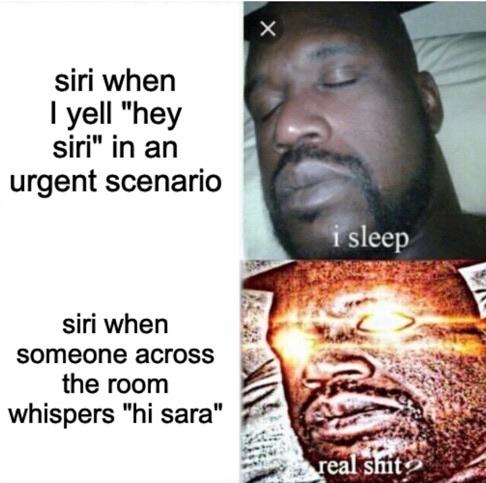
I’m not saying here that nobody should study Fine Arts, Philosophy, or Journalism. I’ll try to explain with an example. When Apple decided to create Siri, a complete personal assistant that could perform various tasks, depending on whatever the user asked for via speech input, the engineering team set out to design and develop the software. They reached a point where they realised that they lacked knowledge on the subject of linguistics, natural language, and syntax. They sought the solution to all these problems at the Philology departments of universities, to which they turned for help. Most of the professors, however, replied that they weren’t engineers, so they couldn’t help them. Others told them that they were very “letters minded”, and that they had opted for studies in the arts precisely to avoid having to do more mathematics, not to mention the fact that they didn’t understand anything about programming or computers. In the end, some of the members of the development team had to start studying linguistics. The moral of all this is that if we manage to train our young people in the STEAM disciplines at early ages, later, when they have to choose which degree to pursue, they can select anything... no matter what they choose, they’ll always have their technological knowledge. And this, in turn, will allow these types of studies to grow even more.
ROOM FOR IMPROVEMENT
But we always go back to the figures and the evidence. The job openings list for programmers is long. The European Union is going to need 900,000 programmers this year. Neither vocational training nor the universities have been able to prepare their classes and courses to be able to meet this enormous demand, despite having been reminded of this problem, which has been brewing for more than five years now. We especially need vocational training reform in order to better integrate companies into it. A commitment has to be made by both the teachers and the students, who do not usually want to work as programmers due to the bad reputation caused by financial cutbacks; the fact of the matter is that the hourly price of these resources has been greatly devalued. The current business model has to change because we’re not going to have the workers to solve the technological challenges of the future.
Who is going to program quantum computers?
Take our advice and check it out
Slide to show more