Tech that walks the talk
#Pure tech
10.17.2023 Reading time: 5 minutes
BizkaiaTech editorial team
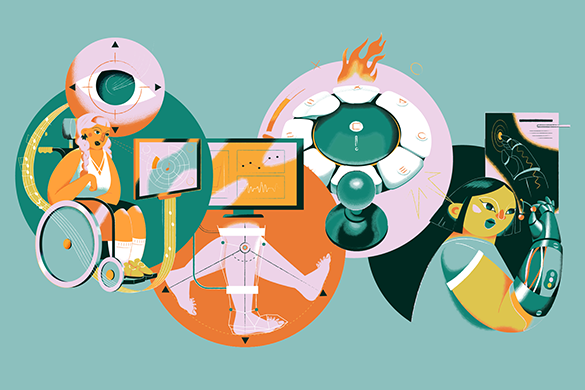
Ilustration: Ana Madinabeitia
You've caught us again… Once more, we wanted to conduct an experiment on our Instagram and TikTok pages (a little follow would be appreciated) to find out if our followers are aware of some cutting-edge technologies that are helping many people in their daily lives. Want to see how the experiment turned out?
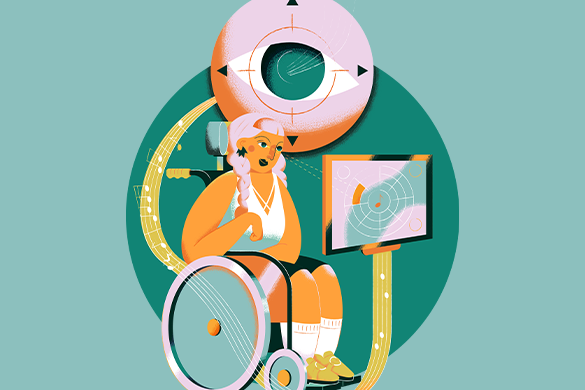
EyeHarp, you can now play music with your eyes:
100% of the surveyed individuals had not heard about the project.
- What is it? EyeHarp is the first musical instrument that allows you to play music using your gaze or head movements.
- Who does it help? It aids individuals with conditions such as cerebral palsy, amyotrophic lateral sclerosis (ALS), muscular dystrophy, upper limb amputation, or spinal cord injury, among others.
- How did the idea originate? The idea came to Zacharias Vamvakousis (the creator) when a friend of his, who was a musician, had a serious motorcycle accident. Initially, it seemed like he wouldn't be able to play music again, so Vamvakousis began working on the perfect solution for him.
- How is it possible that it works? The program operates thanks to eye-tracking, which is the technology that records the movements of our eyes to track each of our eye movements (yes, it's the same technology used in marketing to determine what captivates our gaze). Through open-source and free software, anyone can use their eyes to play a melody.
Rehabilitation Robots, embarking on a new journey:
67% of the surveyed individuals had not heard about the project.
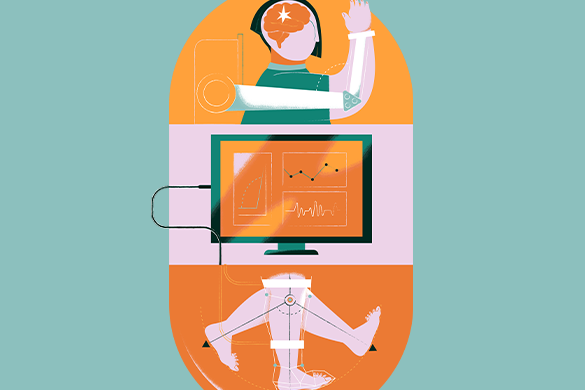
- What are they? These are assisted therapy robots that ensure each patient's movements are consistent (so the brain learns to perform them independently) and collect data for the caregiver to analyze with much greater precision.
- Who do they help? They are machines used to expedite the rehabilitation process for individuals who have experienced a stroke (in other words, people who have suffered a stroke, which occurs when something obstructs the blood supply to a part of the brain or when a blood vessel in the brain ruptures) and other severe neurological disorders (such as epilepsy, Alzheimer's and other dementias, or migraines, among others).
- How did the idea originate? Rehabilitating individuals who have suffered these types of injuries not only requires a lot of effort but unfortunately often comes with a very high cost. Nevertheless, even after therapy, many patients still face mobility issues. These machines not only increase the effectiveness of treatment by 15% but also reduce its cost by 25%.
- How is it possible that they work? They have exoskeletons tailored to help regain mobility in a specific part of the body. These exoskeletons are linked to a program that guides them on the type of training to perform with the patient. The assistance level or force (provided by the robot itself) can be configured based on each patient's specific case, as these robots always work alongside a rehabilitation expert.
Ability hand, the return of touch:
100% of the surveyed individuals had not heard about the project.
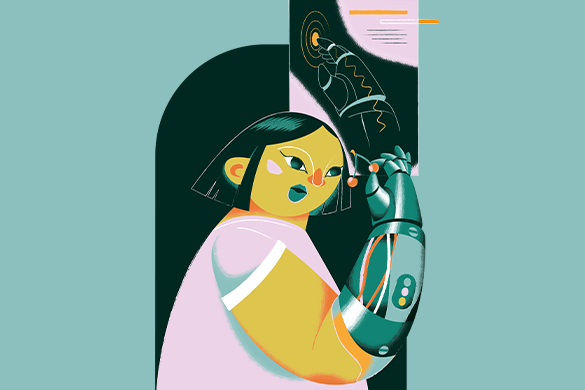
- What is it?It's a state-of-the-art bionic hand, the world's first, designed to help individuals who need it to regain the sensation of touch.
- Who does it help? It's designed for anyone who, for any reason, has lost their hand.
- How did the idea originate? The CEO at PSYONIC (the one behind this gadget), Dr. Aadeel Akhtar, was just seven when he saw someone with an amputation during a trip to Pakistan. Same age as him! It hit him that not everyone had access to healthcare like he did.
Fast forward to his college days, he kicked off PSYONIC to make kick-butt prosthetics that don't break the bank. Started with a couple of brainy folks at the University of Illinois, and bam, it turned into a full-blown project. Backed by health gurus, social heroes, designers, and big shots in medicine and NGOs.
- How is it possible that it works? The Ability Hand comes with sensors that feel the pressure at the fingertips when grabbing something. Once they sense it, these sensors shoot a vibe up the arm, giving you the feel of touching or grabbing an object.
Project Leonardo and the right to play
100% of the surveyed individuals had not heard about the project.
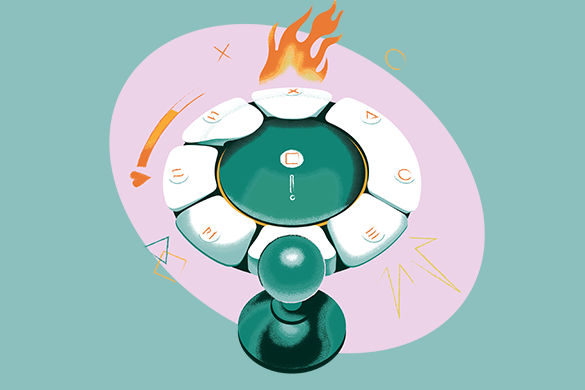
- What is it? It's a PlayStation 5 (PS5) controller modified so that people with any disability can play. It's crafted by the Sony team with input from organizations like AbleGamers, SpecialEffect, and Stack Up.
- Who does it help? To anyone struggling to work the usual PlayStation controller, especially for folks with not-so-easy moves. Let's make gaming a breeze, no matter the groove!
- How did the idea originate? PlayStation noticed that folks with limited motor skills couldn't game like the rest of us. Holding the controller, pressing multiple buttons, dealing with those tiny buttons, or just finding the right hand position for a seamless gaming experience posed a real challenge. They decided, "Hey, let's fix that!"
- How is it possible that it works? It's a blank canvas, waiting for gamers to craft their unique playing experience. The kit includes interchangeable components—different buttons, caps, and levers—so anyone itching to score an epic goal in FIFA, for instance, can stack the buttons on top of each other. No need to struggle with pressing circle and R1 simultaneously; just stack 'em and score that SIIIUUUUUUU goal. Plus, it's entirely static, so you don't have to worry about holding onto it while you conquer virtual worlds.
Labels
- #emprendimiento
- #innovación
- #cocreación
- #bigscience
- #ciencia
- #colaboración
- #democratización
- #arte
- #discapacidad
Take our advice and check it out
Slide to show more
Cookies
We use proprietary and third-party cookies for technical, analytical and customisation purposes, such as choosing the language in which to display the website. For more information, please consult our cookies policy (Opens modal window).
Cookies policy
The website at https://www.bizkaia.eus (hereinafter, the Website) uses tools to track browsing activity on the website and the IP address of the service recipient for the purpose of improving and guaranteeing the provision of services or technical operation of the website, distinguishing you from other users and analysing your browsing habits.
This Cookies Policy seeks to inform you clearly and precisely about the operation and function of the cookies we use.
What are cookies and why do we use them?
A cookie is a file that is downloaded to your computer when accessing certain websites.
Cookies enable a website to, among other things, store and recover information about the browsing habits of a user or their device and, depending on the information contained and the way in which the same is used by the device, may be used to recognise the user.
Current law allows us to store cookies on your device if they are strictly necessary for operation of this website. However, we need permission for all other cookies.
Types of cookies based on the managing entity
Depending on who manages the computer or domain from where the cookies are sent and who processes the data obtained, a distinction can be made between the following types of cookies:
- Proprietary cookies: these are managed by the Provincial Council of Biscay.
-
Third-party cookies: these are managed by another entity, which processes the data obtained via the cookies.
This website may contain cookies belonging to the Basque Government, used for its own purposes and stored by domains other than those owned by the Bizkaia Provincial Council.
Types of cookies based on their purpose
- Technical cookies: these allow the user to browse a website, platform or application and to use the various options or services available, such as control data traffic and communication, identify the session, access restricted areas, request registration or participation in an event, use security elements while browsing, store content for video or audio playback, or share content via social media networks.
- Customisation cookies: these allow the user to access the service with some general characteristics predefined according to a series of criteria on the user’s device, such as the language, type of browser being used to access the service, regional configuration from where the service is accessed, etc.
- Analysis cookies: these allow the number of users to be counted and the browsing activity to be statistically measured and analysed for the purpose of improving the services made available. They may be proprietary or third-party cookies.
Duration of the cookies
- Session cookies: these collect and store data while the user is visiting a website.
- Persistent cookies: the data are stored on the device in an ongoing fashion and may be accessed and processed during a period defined by the cookie manager, which may range from a few minutes to several years.
Which cookies does this website use?
In each row you can find data relating to Technical cookies
| Name | Purpose | Duration | Owner |
|---|---|---|---|
| JSESSIONID | Session identifier | Session | Bizkaia Provincial Council |
| ASPSESSIONID | Session identifier | Session | Bizkaia Provincial Council |
| TS01 | Session identifier | Session | Bizkaia Provincial Council |
| LFR_SESSION_STATE | Session identifier | Session | Bizkaia Provincial Council |
| COOKIE_SUPPORT | Indicate whether the user has the cookie support activated | 1 year | Bizkaia Provincial Council |
| pc_tecnicas_bizkaia | Choose your preferences for acceptance of the block of technical cookies | 1 year | Bizkaia Provincial Council |
| pc_analitica_bizkaia | Choose your preferences for acceptance of the block of analytical cookies | 1 year | Bizkaia Provincial Council |
| pc_preferencias_bizkaia | Choose your preferences for acceptance/rejection of the block of preferential cookies | 1 year | Bizkaia Provincial Council |
| pc_terceros_bizkaia | Choose your preferences for acceptance/rejection of the block of third-party cookies | 1 year | Bizkaia Provincial Council |
| Kultursistema_session | Keeping the user’s session | 1 year | Kultursistema |
| CPLB | Contains information used by our load-balancing servers | Session | Provincial Council of Biscay |
| XSRF-TOKEN | To prevent CSRF (Cross-Site Request Forgery) attacks | 1 year | Kultursistema |
| _GRECAPTCHA | Protects the website from spam and brute-force attacks | 5 months |
In each row you can find data relating to Analysis cookies
| Name | Purpose | Duration | Owner | |
|---|---|---|---|---|
| dtCookie | Track a visit through multiple requests | Session | Bizkaia Provincial Council | |
| dtLatC | Measure the latency of the server to monitor performance | Session | Bizkaia Provincial Council | |
| dtPC | Necessary to identify the appropriate parameters for beacon transmission; includes session ID for correlation | Session | Bizkaia Provincial Council | |
| dtSa | Intermediate storage for actions spanning pages | Session | Bizkaia Provincial Council | |
| rxVisitor | Visitor ID to correlate sessions | Constantly | Bizkaia Provincial Council | |
| rxvt | Session waiting time | Session | Bizkaia Provincial Council | |
| iyrc-user-id | Distinguish users | 1 year | Bizkaia Provincial Council | |
| _ga, _ga_XXXXXXXXXXX | Analysis | To distinguish users | 2 years | Google Analytics |
| _gat, _gat_XXXXXXXXXXX | Analysis | To limit the percentage of requests | 1 minute | Google Analytics |
| _gid | Analysis | To distinguish users | 1 day | Google Analytics |
In each row you can find data relating to Personalisation cookies
| Name | Purpose | Duration | Owner |
|---|---|---|---|
| Idioma | Select the language preferred by the user | 1 year | Bizkaia Provincial Council |
| cookie-tramites-favs | Save favourite procedures in Prior Appointment | 1 year | Bizkaia Provincial Council |
In each row you can find data relating to Third-party cookies
| Name | Purpose | Duration | Owner |
|---|---|---|---|
| CLID | Identify a user’s first visit | 1 year | Microsoft Clarity |
| APISID | Store user preferences and information during page views with Google maps in them. | 2 years | |
| HSID | Store user preferences and information during page views with Google maps in them. | 2 years | |
| MUID | Store user preferences and information during page views with Google maps in them. | 1 year | Microsoft Clarity |
| NID | Remember their preferences and other information | 6 months | |
| SAPISID | Show personalised advertisements on Google sites | 2 years | |
| SID | Provide advertisement delivery or retargeting, provide fraud prevention. | 2 years | |
| SIDCC | Provide reliable web traffic identification. | 1 year | |
| SM | Used to synchronise the MUID between Microsoft domains. | Session | Microsoft Clarity |
| SSID | Provide advertisement delivery or retargeting, provide fraud prevention. | 2 years | |
| __Secure-1PAPISID | Create a website visitor interest profile to show relevant and personalised Google advertising. | 2 years | |
| __Secure-1PSID | Create a website visitor interest profile to show relevant and personalised Google advertising. | 2 years | |
| __Secure-1PSIDCC | Create a website visitor interest profile to show relevant and personalised advertising through retargeting. | 1 year | |
| __Secure-1PSIDTS | Create a website visitor interest profile to show relevant and personalised advertising through retargeting. | 1 year | |
| __Secure-3PSID | 2 years | ||
| __Secure-3PSIDCC | Create a website visitor interest profile to show relevant and personalised advertising through retargeting. | 1 year | |
| __Secure-3PSIDTS | Create a website visitor interest profile to show relevant and personalised advertising through retargeting. | 1 year | |
| __Secure-ENID | Necessary cookies to use website services and options | 1 year | |
| ar_debug | Refine advertisements. | 1 año | |
| MR | Indicate when MUID is refreshed | 6 months | Microsoft Clarity |
| XSRF-TOKEN | Indicate when MUID is refreshed | 1 hour | Kultursistema |
| _fbp | Store and track website visits | 1 year | |
| kultursistema_session | Keep the user’s session | 1 hour | Kultursistema |
| AEC | Detect spam, fraud, and abuse | 6 months | |
| SOCS | Store user cookies preferences | 13 months | |
| Locale | not available | Basque government | |
| _hegoa_coop_session | Create a session ID for users | Session | Basque government |
How to deactivate or delete cookies?
When first accessing the Website, the user may configure and accept or reject the cookies on this Website. Subsequently, the user may change or withdraw their consent at any time via this Cookies Policy or the settings page.
However, you may exercise your right to freely deactivate them and even delete the cookies on this Website at any time. This is done differently depending on which browser you are using. Here is a quick guide for the most popular browsers.
- Deactivate Cookies in Chrome
- Deactivate Cookies in Explorer
- Deactivate Cookies in Firefox
- Deactivate Cookies in Safari
- Deactivate Cookies in Edge
If you deactivate or delete cookies, certain features of the Website may no longer function correctly.
Changes to the Cookies Policy
The Website reserves the right to change this Cookies Policy under the terms provided for by current legislation. We therefore recommend that you revise this policy each time you access our website to see any changes and read the pertinent information.
Configure cookies
We show you hereinbelow the different categories of cookies that our web page uses. You can personalise your choice by accepting or rejecting these categories through the buttons enabled to that end. For more information, consult our cookies policy (Opens modal window).
-
Technical Always active
These are needed to allow browsing on our website and for basic tasks related to correct website operation.
