The right to quality of life

#Reflections
10.11.2023 Reading time: 5 minutes
BizkaiaTech editorial team
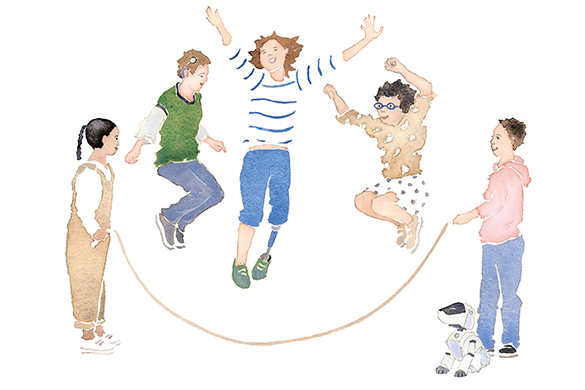
Ilustration: Elena Ciordia
Why kid ourselves? People are huge fans of a good dystopia. Lines at the movies for Oppenheimer (2023) (that flick about the Manhattan Project starring Cillian Murphy), sensational headlines across different outlets predicting an apocalypse brought on by artificial intelligence and robots, and the classic family dinner where someone brings up the topic of "gaming consoles." "Back in the day, we played outside," says your uncle Kepa, throwing shade at the console you're hooked on.
THE JOY OF WALKING WITH YOUR HEAD DOWN
Many times we tend to view technology from a negative perspective, filled with vertigo and rejection. A study by the Basque Government titled “Social Perception of Science and Technology"” (2022) states that in the region, 58% of the population believes that the benefits of science and technology outweigh the drawbacks. That means there's a 42% who think otherwise: 23% of that bunch believes the positive and negative effects are balanced, and the rest (excluding 8% who answered "don't know")—11%—think the harmful effects outweigh the benefits.
The negatives carry weight, no doubt. Still, we also need to see the good, recognize what technology is bringing to us on a social level. What about video calls that have helped the elderly feel less lonely or let you catch up with a friend who went off to India? What about the new energy sources? And what about the fact that you can handle any task/call/meeting—from the comfort of your couch?
Scientific and technological progress is crucial (especially in the times we live in) for our entire society, but there's one group that benefits particularly from these advances: the community of people with disabilities.
TECHNOLOGY AND DISABILITY
A report from Fundación Adecco (2023) discussing technologies and disability states that new technologies have improved the overall quality of life for 75.9% of people with disabilities. As the twelfth edition of this annual report puts it: "…the introduction of adapted technologies and technological support products facilitates tasks and routines for people with disabilities through equipment and programs to enhance mobility, hearing, vision, or communication capabilities." In essence, technology plays a crucial role in enhancing the lives of people with disabilities by providing solutions that allow them to participate more actively and effectively in society, promoting equal opportunities and inclusion.p>
Here at BizkaiaTech Magazine, we love delving into the impact of technology on society and giving a voice to causes that may not always be in the spotlight. That's why, and because it's a topic we believe needs discussion, in this edition, we'll talk about how time and hard work have brought us to a point where the guide dog is being replaced by a device, or we can recover from an injury that initially seemed permanent. Nowadays, it's possible to have hobbies like playing music with your eyes or surfing with an adapted board; we can even reexperience a sensation that seemed lost forever. We are truly living in an exciting moment.
And yes, uncle, now we "play outside" too. In fact, thanks to the advances of recent years, many more people can play outside. And we're not just talking about playing: having autonomy, decision-making authority, or communication skills, among other things, are things that should be celebrated big time because they are essential in the day-to-day lives of all people.
So, Kepa, take note of all this, and if you still feel like coming up with another argument for Christmas dinner, well, good luck because no one can mess with our "gaming consoles" around here!
Take our advice and check it out
Slide to show more