Needles are really something

#Soul tech
03.01.2023
BizkaiaTech editorial team
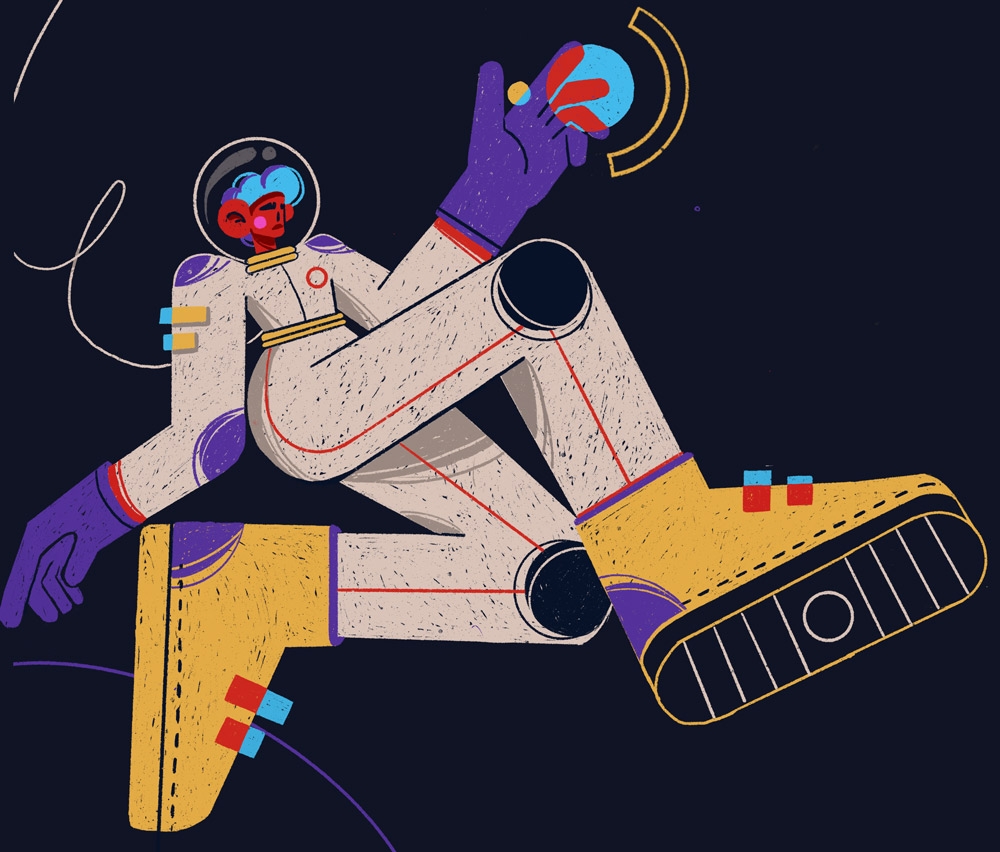
Ilustration: Gloria Maestre
More than 40,000 years ago, humanity faced a challenge on which the success or failure of the species was to depend: not freezing to death and being able to leave the Santimamiñe Cave, in the Upper Palaeolithic, in style.
“Maitia, if you're going to go out, put on the goatskin… the shaman says that the Ice Age is coming this afternoon”.
Climate changes have been occurring naturally throughout history, some after the appearance of our primitive ancestors, Homo sapiens.
Homo sapiens and human beings, by nature, seek survival. We adapt to contemporary changes: climate change, changes in eras, technological changes… in short, changes.
In this, the human communities of the Palaeolithic were no different from those who inhabit the Earth today, and they didn’t have things any easier either. They faced a difficult challenge on which the course of our history was to depend: the struggle to survive.
The point is that they were striving to survive under extremely adverse conditions. The frigid weather reduced their chances outside their shelters, and hunting was a daunting task.
With that hunger and that cold, they surely knew that they needed to find a solution that would change their lives. It would prove to be a solution that changed our lives.
The moment of change had arrived: adapt or die. The first solution to this problem was to bundle up with pieces of animal skin fastened to the body in a somewhat rudimentary way. Although this did offer protection from the cold, it was not ideal, as ankles were exposed to the elements, and the way these garments were attached to the body (tying the pelt itself, or using fibres) reduced the speed and agility of those who wore them, giving predators an advantage and jeopardizing the clan’s dinner.
This must have been quite distressing for the tribes who saw their numbers dwindling from the cold, hunger, and the beasts they were competing against to survive. Eat or be eaten.
They had to find a better solution. Their challenge, as we have stated, was survival.
The idea, most likely, was to find a way not to freeze to death when leaving the cave, find a mammoth for dinner, and emerge triumphant over the rest of their predators.
Once solutions like surrounding themselves with fire, and other impracticable proposals had been ruled out, some brilliant mind must have suggested: “What if we had hides that covered our entire bodies and allowed us to move freely and with agility? Something that would fit the body, allowing us to run and move our arms, without limiting us”.
In a similar context, someone eager to experiment probably did so until they came up with one of humanity’s oldest innovations, one that would steer our history in a new direction: the needle.
The great innovation that marked a turning point. A simple but great idea confirmed to be at least 40.000 years old, while some unproven hypotheses suggest that it was as many as 60,000 years ago.
Nobody knows (or probably ever will, mystery is part of the story’s charm) what the creative process that led them to this brilliant idea was like, but we can try to imagine it.
The aim was to improve the way two or more pieces of animal skin were joined. One option would be to use bones as cotter pins and pierce the hides to join them. However, in addition to the clothing not being well fastened (there would be holes in the seams), in the long run those valuable skins would end up tearing from the tension, and they would go to waste.
Experimenting with two pieces of hide that had already been perforated, someone must have tried to tie the holes together with leather strips, plant threads, or something similar - a first step on the path towards sewing and fashion. This surely improved the garment’s comfort and strength, but the arduous task of piercing the skin, and its inevitable tearing, was to eventually rule out this solution. Back to the drawing board.
Inserting the thread while piercing the hide was going to be the best and easiest solution to this problem.
At this point, let us pause to reflect. Has anyone ever imagined whether all these tests were carried out with the clan’s best hides? It seems logical to assume that scraps or old hides would be used, so as not to squander what was, undoubtedly, an extremely valuable resource, difficult for them to hunt. To experiment assuming failure, a “learning opportunity”, without this entailing a serious loss (the “trial and error” of the time).
After numerous tests tying, sticking, and who knows what else, someone must have tried to make a tiny hole in a fine, pointed instrument, without realising that this would forever change the course of human history.
We feel a special admiration for those anonymous people who were the first to achieve something; creative and brave individuals. We should all be grateful to that first person, man or woman, for having conceived of the needle, and for having shared it and taught people how to produce their idea in the clan, the tribe, the culture…
The first needles were made with antlers, bone, wood, etc. But curiously, their design is not unlike that of any sewing needle that we can find around the world today. At the Arkeologi Museoa (Archaeological Museum of Biscay) we can view some magnificently preserved pieces found in different caves in Biscay, and it turns out that they’re almost identical to those that, as kids, we used to pick up with a magnet from between the gaps in the flooring of amama’s (grandmother’s) house.
The “simple” needle is a clear example of how an innovation can change an entire species’ way of life.
In the Palaeolithic, Homo sapiens probably had more opportunities to hunt better game. In turn, this meant having better skins to keep warm and move more agilely.
Garments sewn with human hair were found near the impressive Newgrange Passage Tomb (which we recommend visiting if you ever travel to Ireland). It makes all the sense in the world to use your own hair as a primitive sewing thread. We can even say that, as a result of the needle, hair care and styling were also developed.
And, if hair could be used as thread, why couldn’t wool, linen, and cotton be used for fabrics? Therefore, the needle precipitated the development of fabrics, thanks to experimentation with natural threads.
Like a string of dominoes, the improvements would reach every aspect of their lives; thanks to a continuous search for solutions and experimentation, the needle became a catalyst for change.
THE FACT IS THAT NEEDLES ARE REALLY SOMETHING
Generations later, humanity would continue to face new challenges; among them, venturing out onto the ocean to reach Polynesia. To meet this challenge, people’s ingenuity was required to develop a new invention and go beyond what navigation with oars had allowed them to do.
It’s not known exactly when or where sailing was invented, but we find records of it in Egypt dating back some 5,000 years.
Once again, the idea spread from community to community, making one of humanity’s great milestones possible: the settlement of Polynesia, a group of around a thousand marvellous islands spread over an area of thirty million square kilometres in the Pacific Ocean.
The needle of the caves was, once again, the catalyst for another great step for humanity.
Sailing has been a great opportunity for human beings throughout history, giving them the chance to reunite with their brothers and sisters on the other side of seas after millennia of separation. Although the encounter between civilisations sometimes had terrible consequences, we mustn’t forget that contact between different cultures benefits humanity in the long run: new forms of art, new foods, new knowledge, new changes…
If we look around us, it’s difficult to find something that didn’t require a needle to be fashioned. Even sewing machines have a needle inside. In more than 40,000 years of history, materials and sizes have changed greatly, but no one has managed to improve on the idea of using a fine, sharp instrument to join two fabrics with a thread. Its sophistication lies in its simplicity.
A few months ago, an article about a Vietnamese woman named Lien Pham fell into our hands. Her job is to make the suits that astronauts use when they travel into space. Even now, in our technologically advanced time, we human beings need an innovation that came about in the Palaeolithic to continue to broaden our horizons.
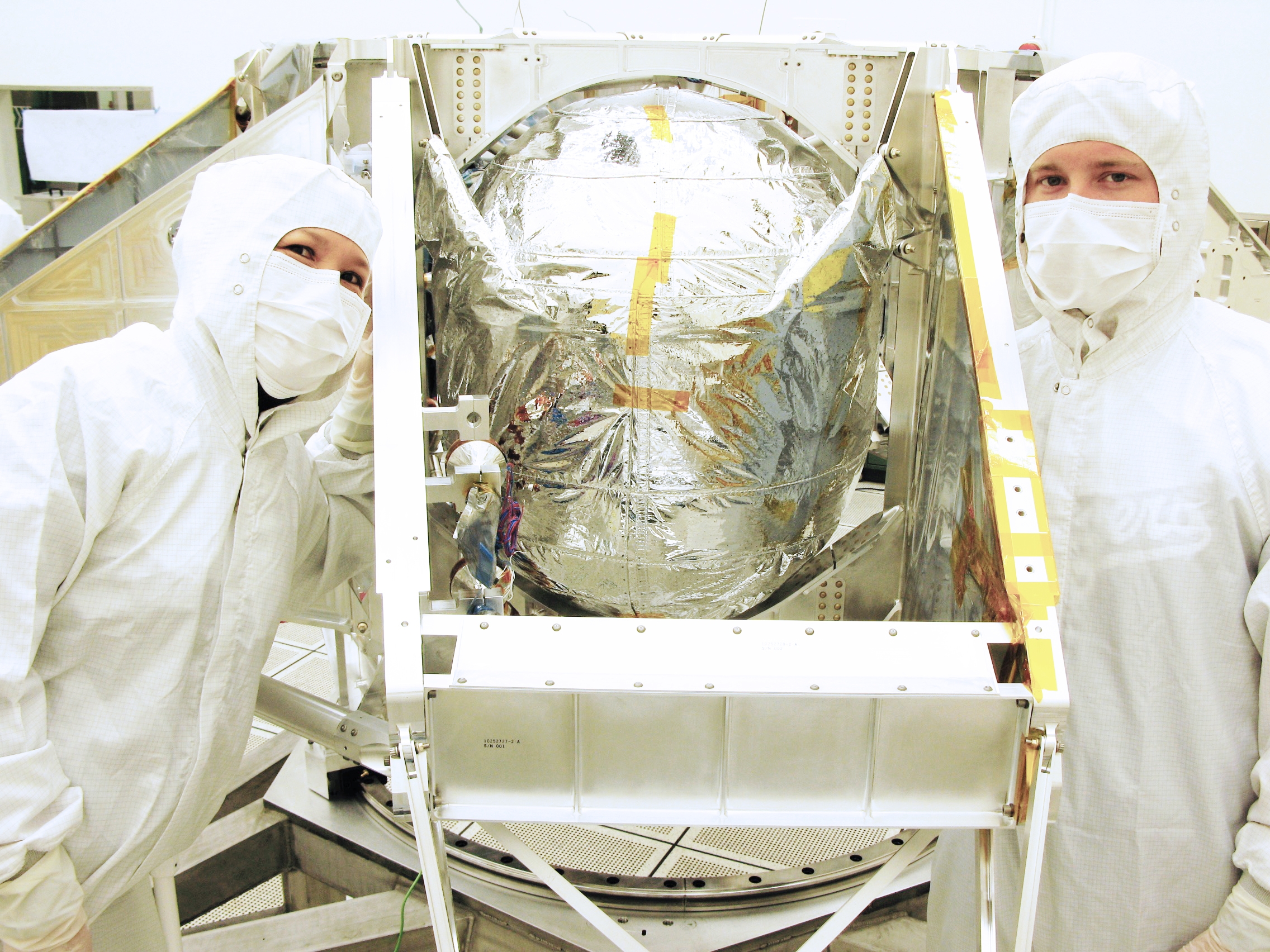
The needle is just one of the examples that helps us to convey the idea that innovation is a natural impulse in Homo sapiens. It illustrates how a small contrivance – simple but sophisticated – has shaped the course of history by helping humanity not only to survive, but also to conquer harsh parts of the world, and outer space, all thanks to innovation.
This example helps us to reflect on the topic that sometimes keeps us up at night: innovation. After all, when we hear or read this word today (one that is common in many different fields), concepts like “the Internet”, “digitisation”, and “emerging technologies” come to mind. Thus, it would seem as if innovation were something exclusive to the last century, when, in fact, it has occurred ever since the dawn of humanity.
It’s true, however, that it was not until the beginning of the 20th century that Joseph Schumpeter studied the phenomenon of innovation in the economic cycle and theorised about it. The definition that the Oslo Manual offers in this regard is as follows: “An innovation is a new or improved product or process (or a combination thereof) that differs significantly from the unit’s previous products or processes and that has been made available to potential users (product) or brought into use by the unit (process).”
We could find thousands of similar cases that fit the definition proposed in the Oslo Manual. And, most likely, in almost all creative processes, moments of coming up with an idea, hypothesising, experimentation, learning, and dissemination will be found, among others.
In 2015, during the 70th Session of the UN General Assembly, the 17 Sustainable Development Goals were adopted, with number 9 making explicit reference to the promotion of innovation. In our humble opinion, each and every one of the objectives will need innovations in their respective fields in order to become realities, and they will surely come to be in a natural, tacit way. After all, innovation is one of the traits that makes human beings what we are and what we become.
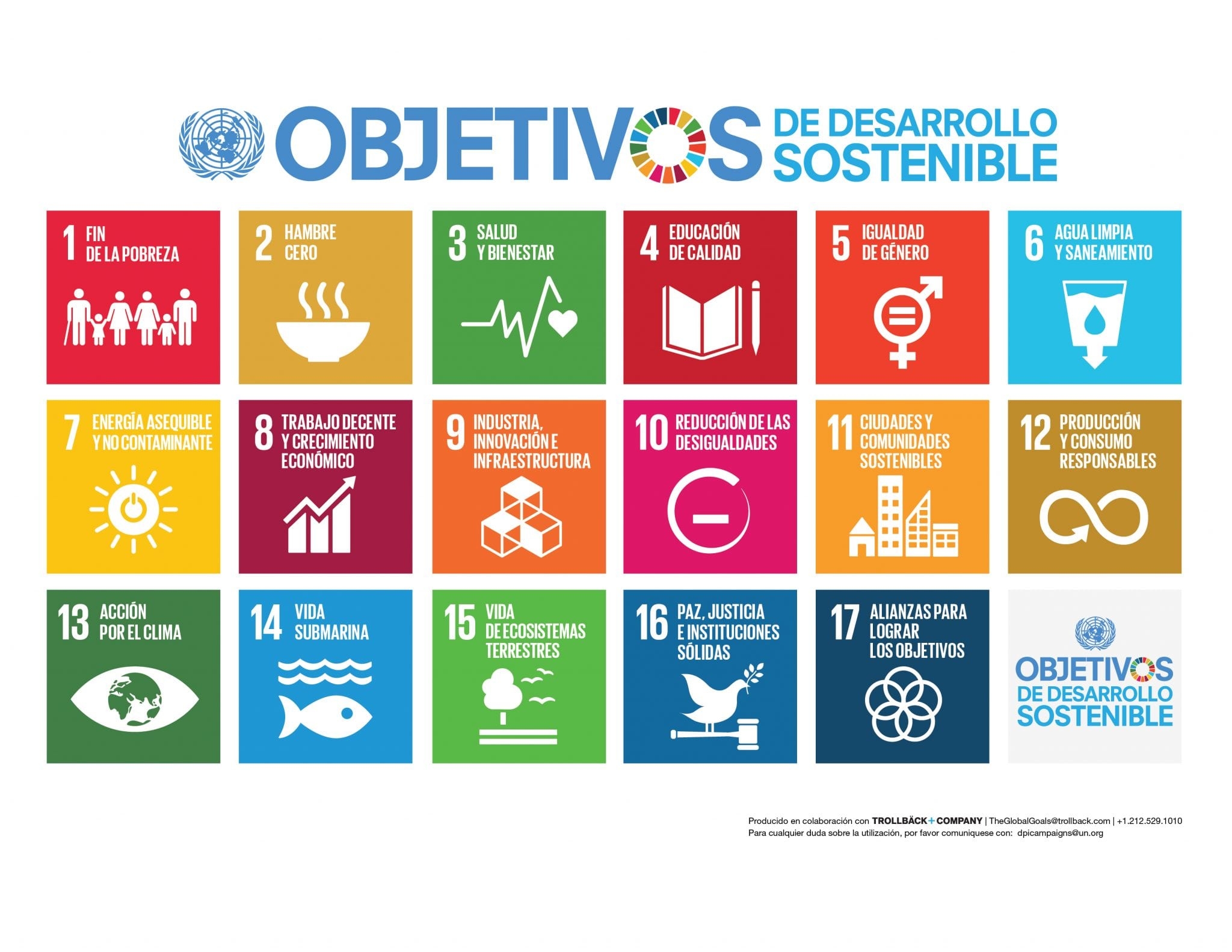
Sustainable Development Goals
- No poverty
- Zero Hunger
- Good Health and well-being
- Quality education
- Gender equality
- Clean water and sanitation
- Affordable and clean energy
- Decent work and Economic Growth
- Industry, Innovation and Infrastructure
- Reduced Inequality
- Sustainable Cities and Communties
- Responsible consumption and production
- Climate Action
- Life below water
- Life on land
- Peace, justice and strong institutions
- Partnerships for the goals
Today, as a species, we face two great global challenges: the fight against SARS-CoV-2 and against global warming. We will, obviously, have to apply all our innovative potential to face them successfully. On a more local level, thinking about the region of Biscay, we’re facing profound changes stemming from the Fourth Industrial Revolution – challenges that will affect us, even if we’re looking the other way.
If we understand that innovation is the needle that helps to sew and repair the fabric of our history, and that it leads us to a better future for all… then let’s get sewing!
Take our advice and check it out
Slide to show more